Registration open 2026 Leadership Intensive · November 6–8 · Atlanta See the program

Our story

What started as a two-day workshop in January 2016 has grown into ten years of investment in Black women and girls in computing+tech.

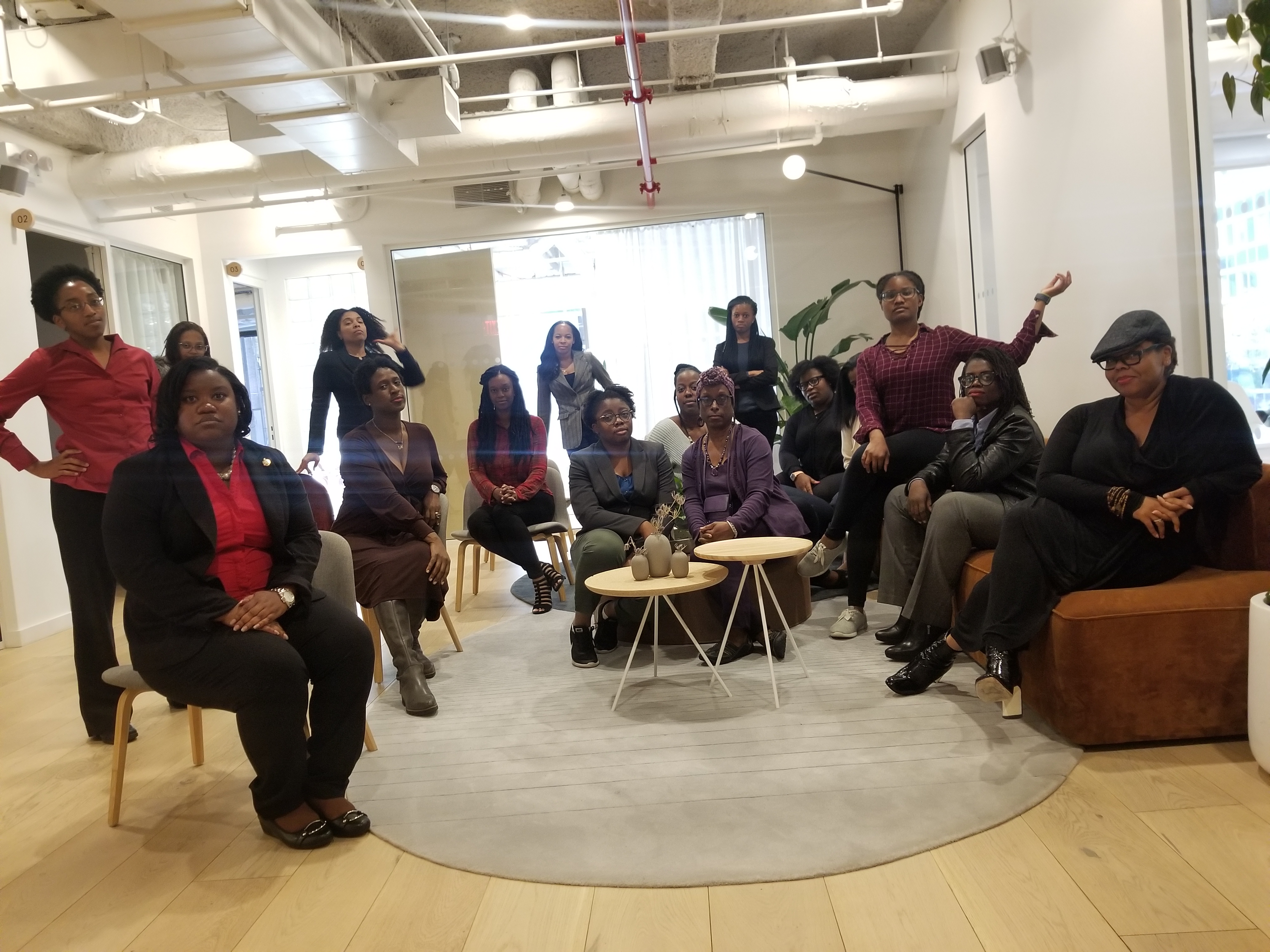
blackcomputeHER Fellows gathered together as a group
Elevating Black women, impacting everyone

Where we began

In 2016, our founders noticed a gap that even women's tech conferences weren't filling.

Our founders, experienced computing researchers and professionals, saw that while attending technical conferences, some of them designed for women, there was still a gap in programs and training that supported women of color.

The stories of Black women in computing, their educational experiences and how they persist in computer science were not well understood, or built into programs designed for student resilience and success. That was an opportunity to understand the differences Black women in computing+tech experience, and how they can be better supported in school and at work.

So in January 2016, we brought together 24 Black women in computing from universities and industry for a two-day workshop with two goals: to explore the intersectional experiences of Black women in the computing sciences, and to turn what we learned into an action plan that addresses the lack of awareness around this intersectionality.

Other women of color, including Hispanic and Native American women, have similar experiences.
Mission and vision

  • Our mission

    blackcomputeHER.org provides computing+tech education and workforce development for Black women and girls.

  • Our vision

    We give voice to technical women whose contributions often are overlooked or go unnoticed.

    We help Black women and girls thrive in school, work and life. We believe that everyone deserves the opportunity to reach her fullest potential.

Seven themes that started it all

The 2016 workshop participants identified seven themes, then built an action plan for each, with a lead for every next step.

  1. Linking Black women in computing to the bottom line for accountability

  2. Developing key influencers and thought leaders

  3. More cultural and educational support for Black women in computing

  4. Leadership development

  5. Building collective research about Black women in computing

  6. Our voices: illuminating our trials and triumphs

  7. Branding and communication

Our journey

From one workshop to eight conferences, a first-of-its-kind Fellows program and published research.

  1. Jan 2016

    The original workshop

    24 Black women in computing from universities and industry meet for two days and leave with an action plan across seven themes.

    • #WhereItBegan
  2. 2016–2019

    From 24 to more than 200

    Our gatherings grew from 24 women in 2016 to more than 200 in 2019, our largest in-person convening. We have now held eight conferences, virtual and in person.

    • #Conference
  3. 100+ Fellows

    #blackcomputeHER Fellows

    A first-of-its-kind 12-month program of professional development, mentoring and technical training for Black women professionals and graduate students. More than 100 women have come through it.

    • #Fellows
  4. 2024

    A special issue in ACM Transactions on Computing Education

    We released the Special Issue on Situating the Intersectional Experiences of Black Girls and Women in Computing & Technology, answering the gap in collective research our founders named in 2016.

    • #Research
  5. 2026

    Leadership Intensive and founding members

    Our residential leadership program launches in Atlanta, and a founding cohort begins shaping BCH membership.

    • #Leadership
  6. 2027

    Membership opens to everyone

    Workshops, videocasts and community in one place, year-round, starting with the four-part CEO Series.

    • #Membership
  • #Community
  • #Partners

The people behind BCH

Our board, sponsors and partners make this work possible, alongside the members and Fellows who carry it forward.

Our partners have included the American Association of Colleges and Universities, HP Inc., the Kapor Center for Social Impact, the Thurgood Marshall College Fund and select HBCUs.